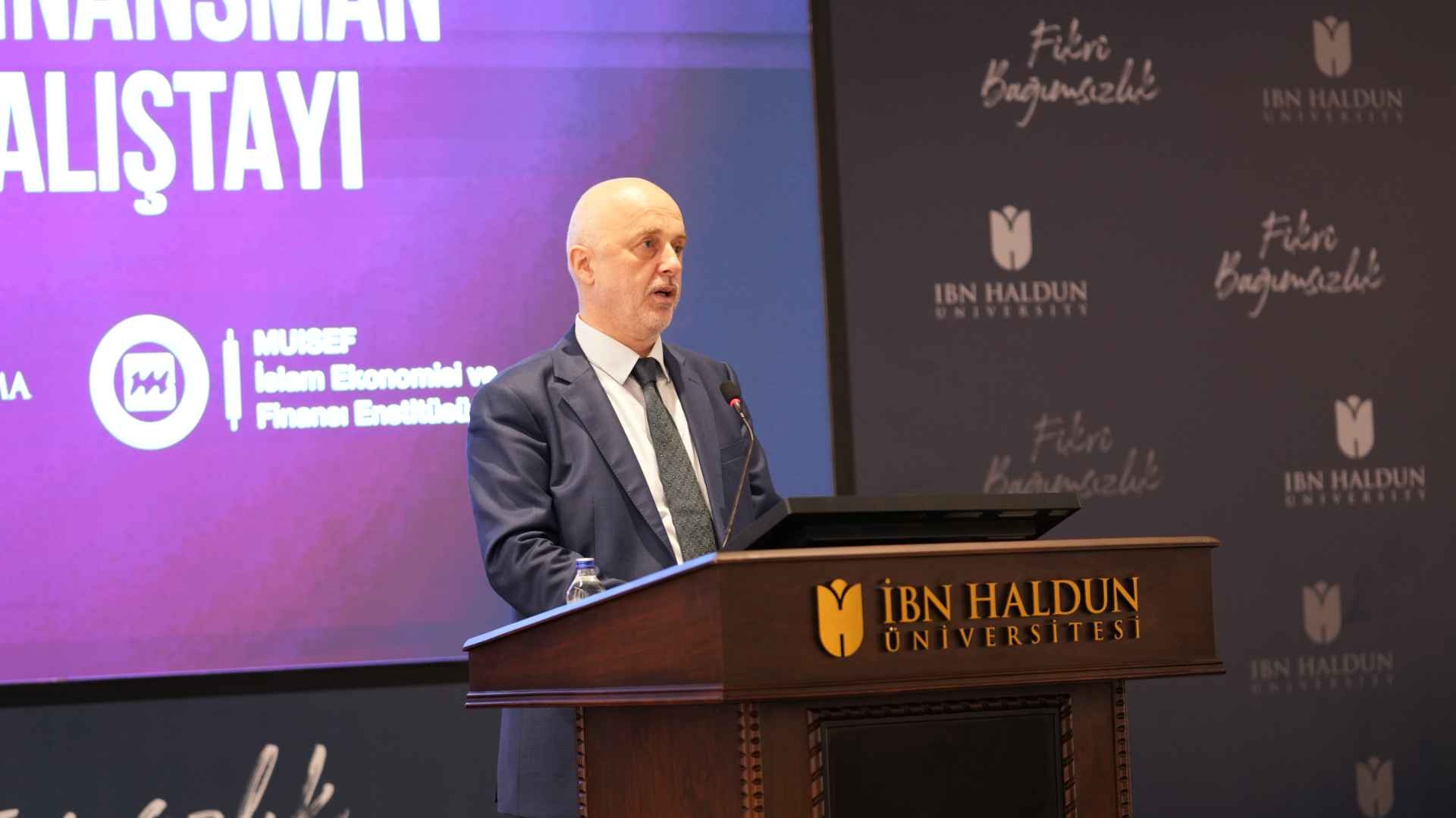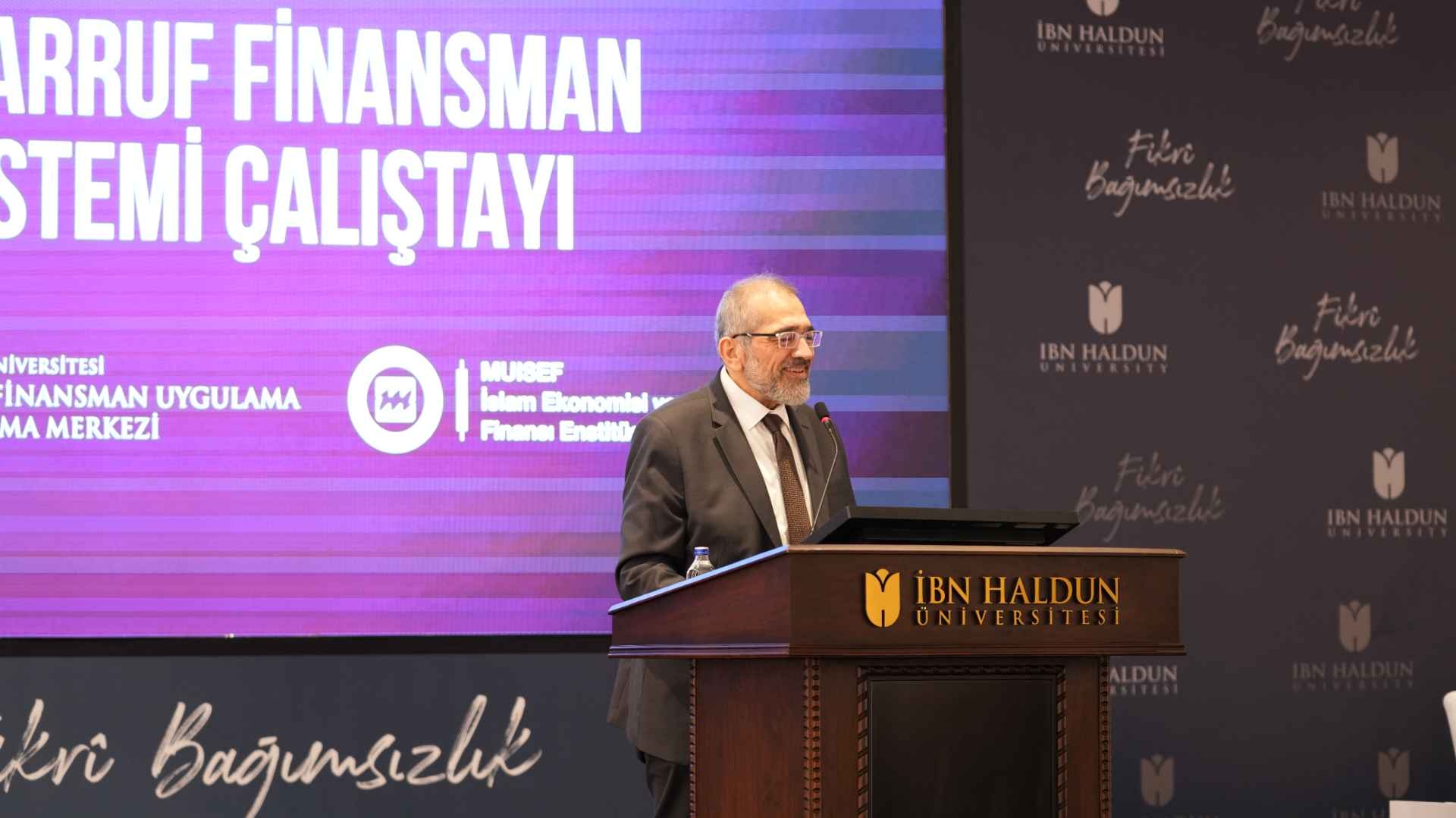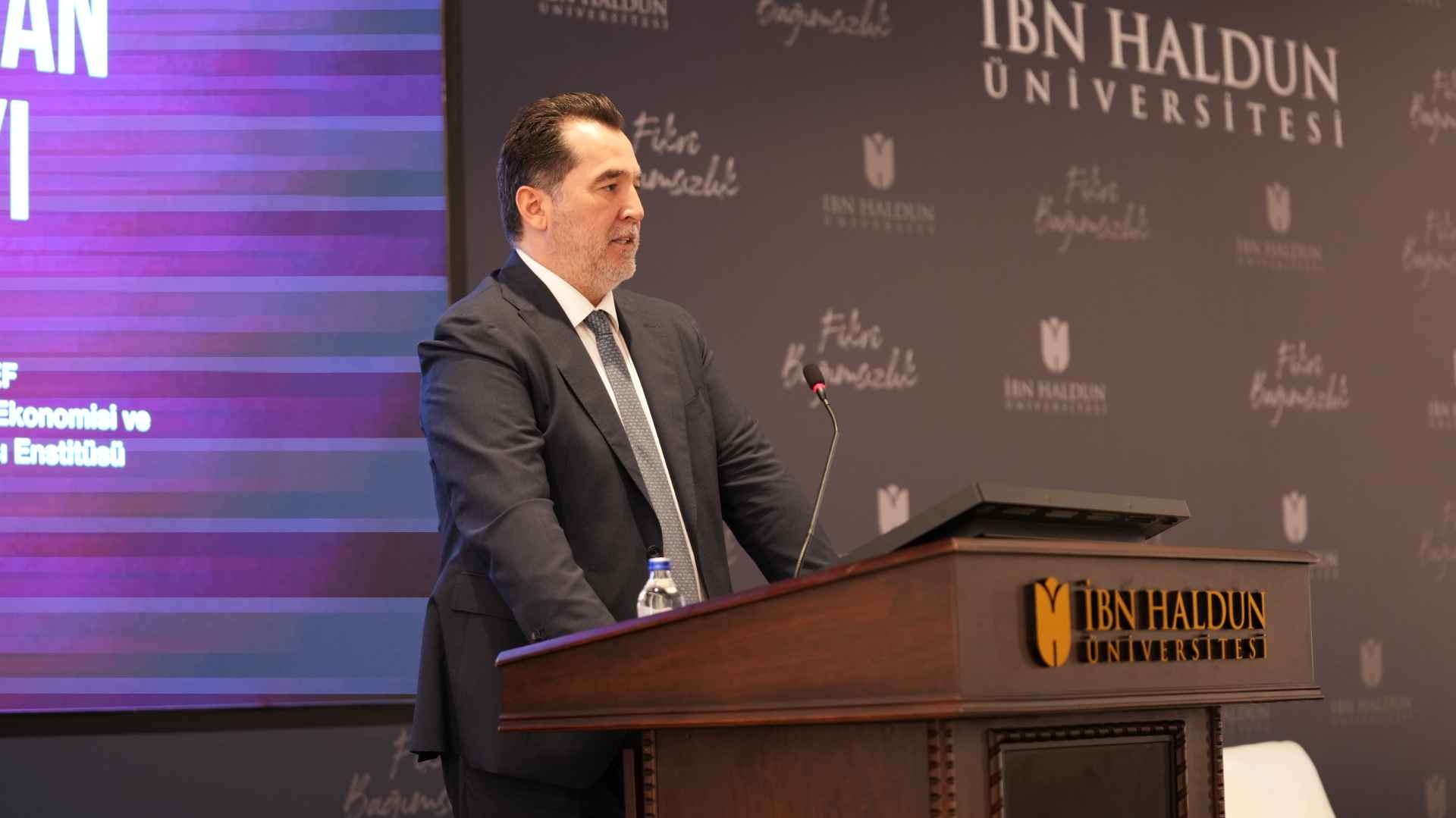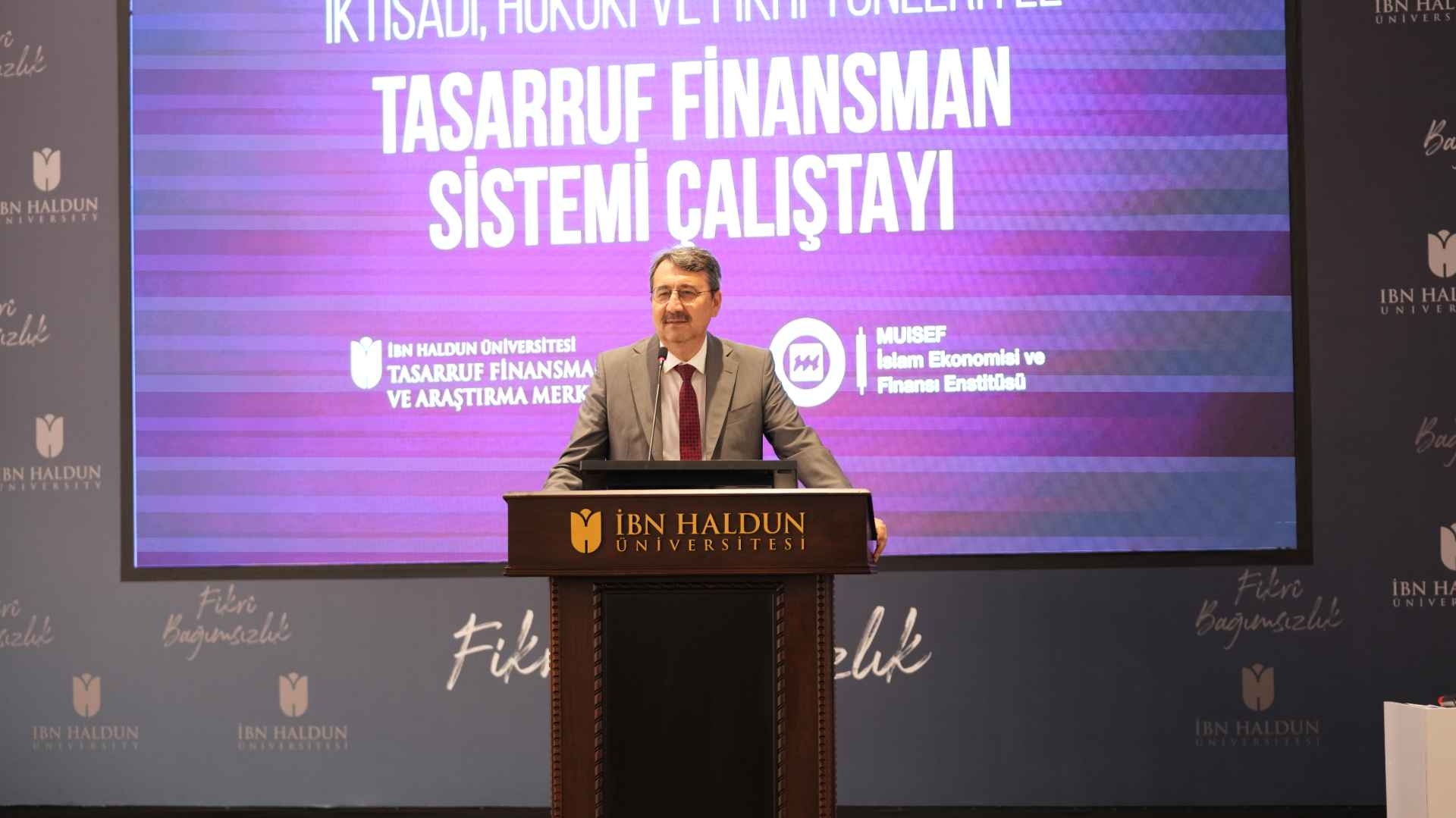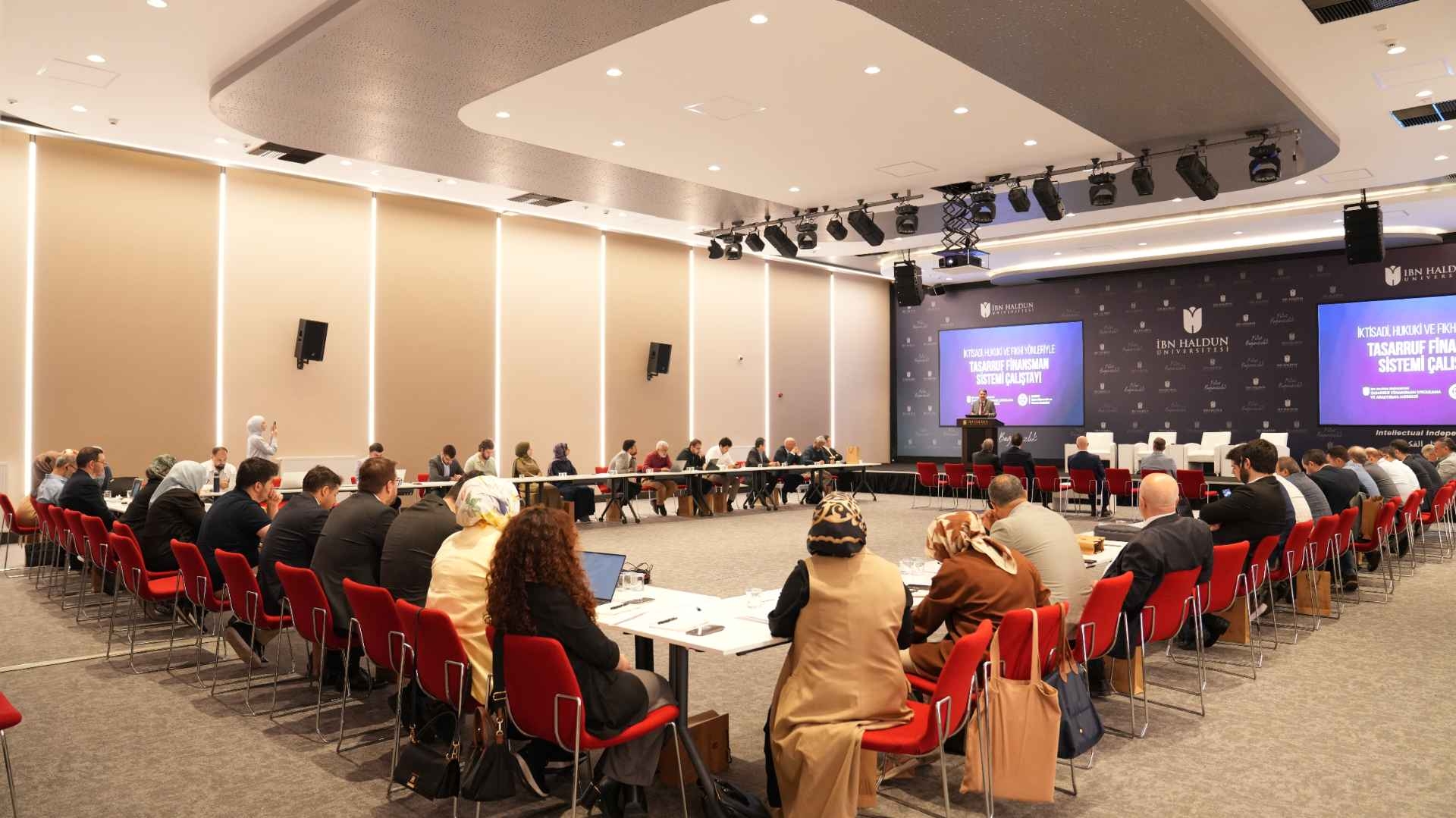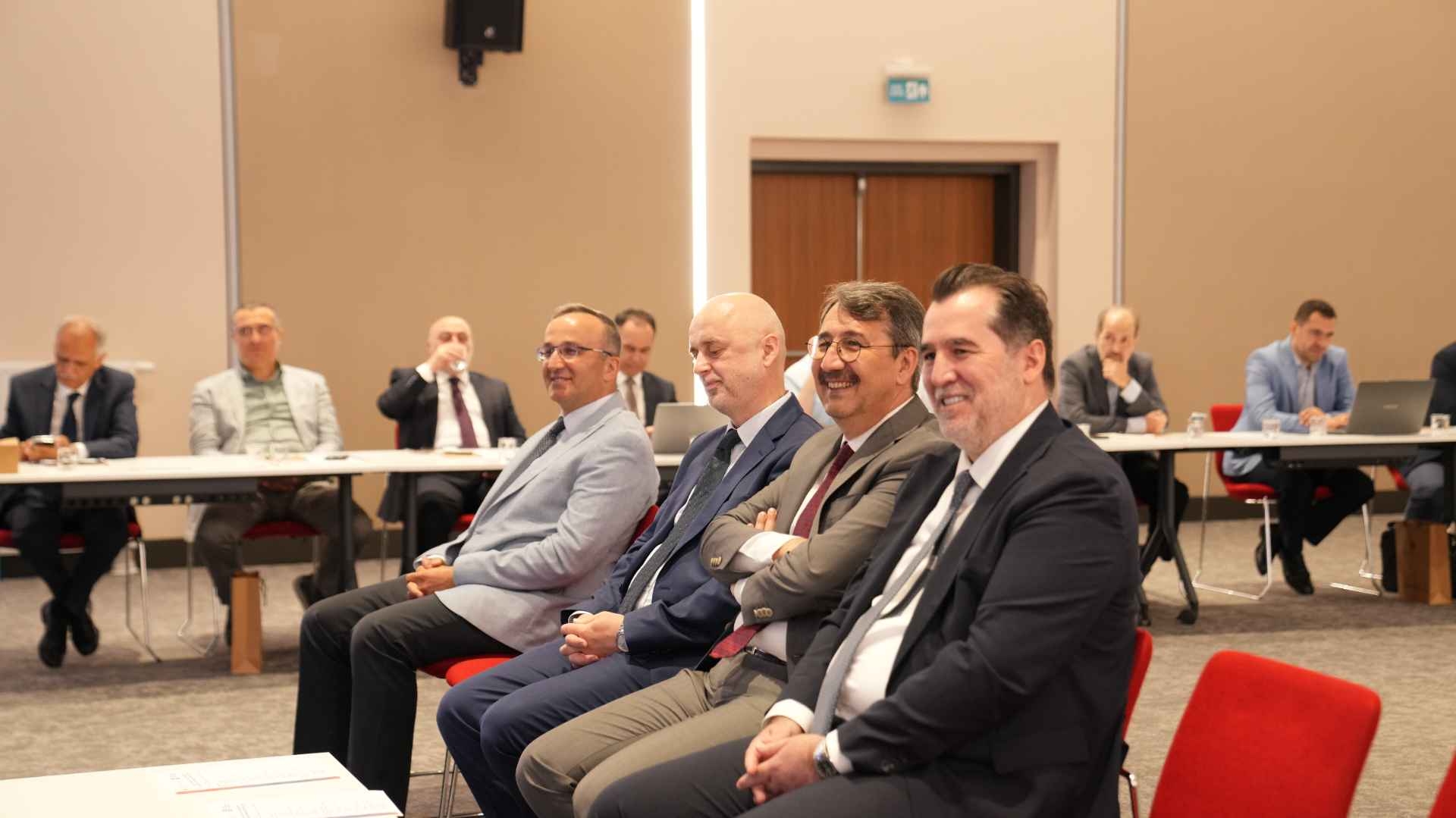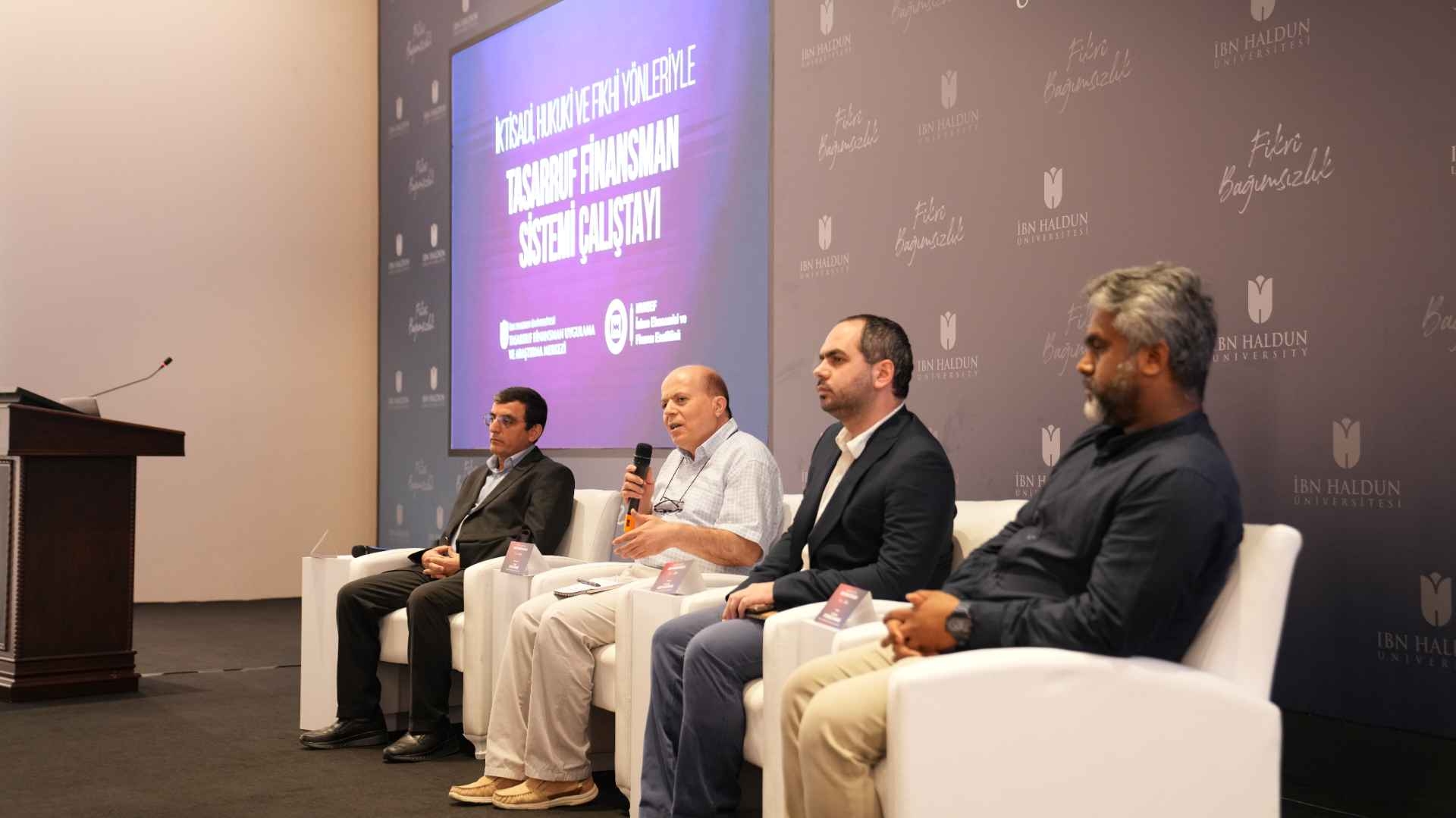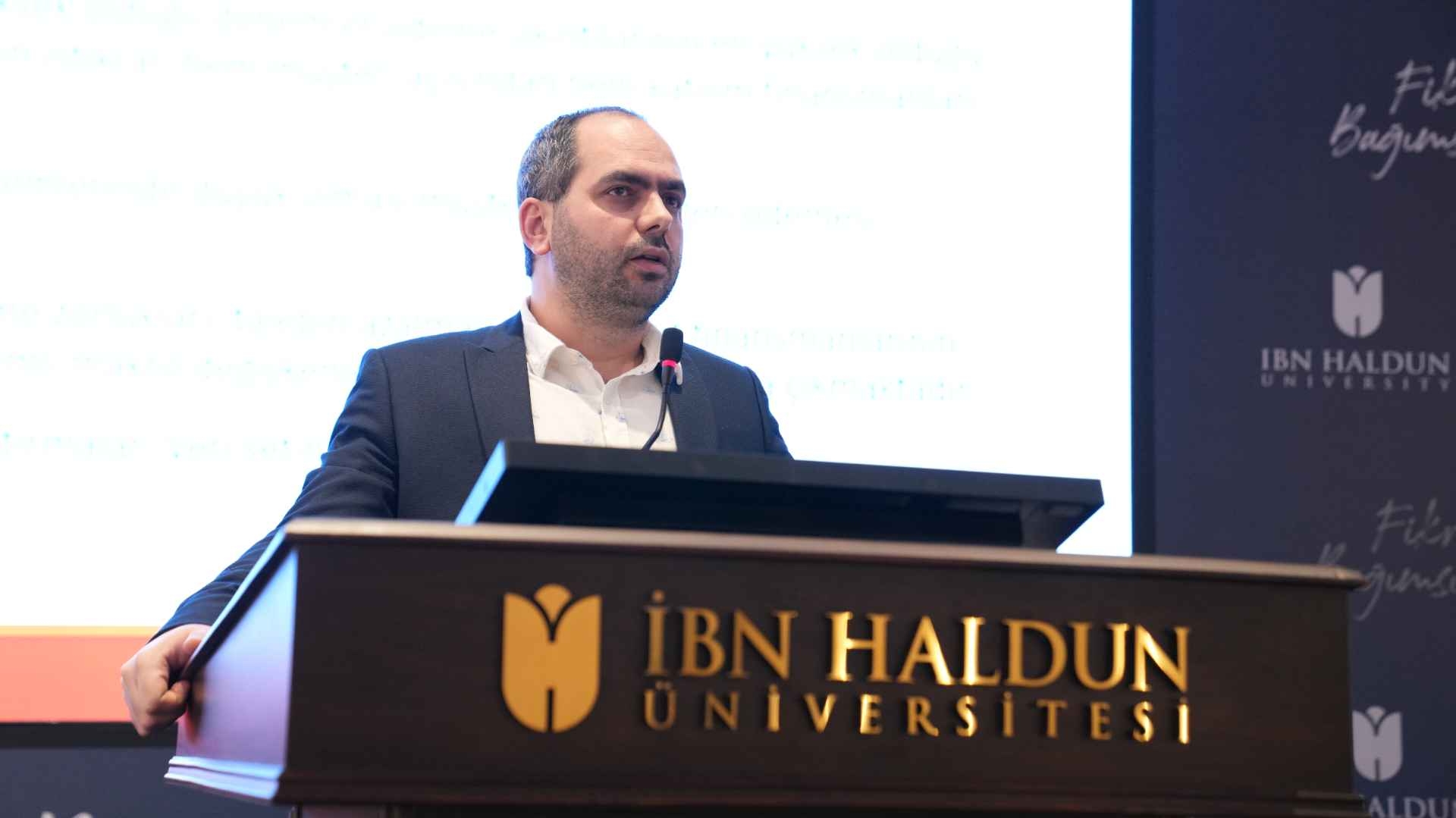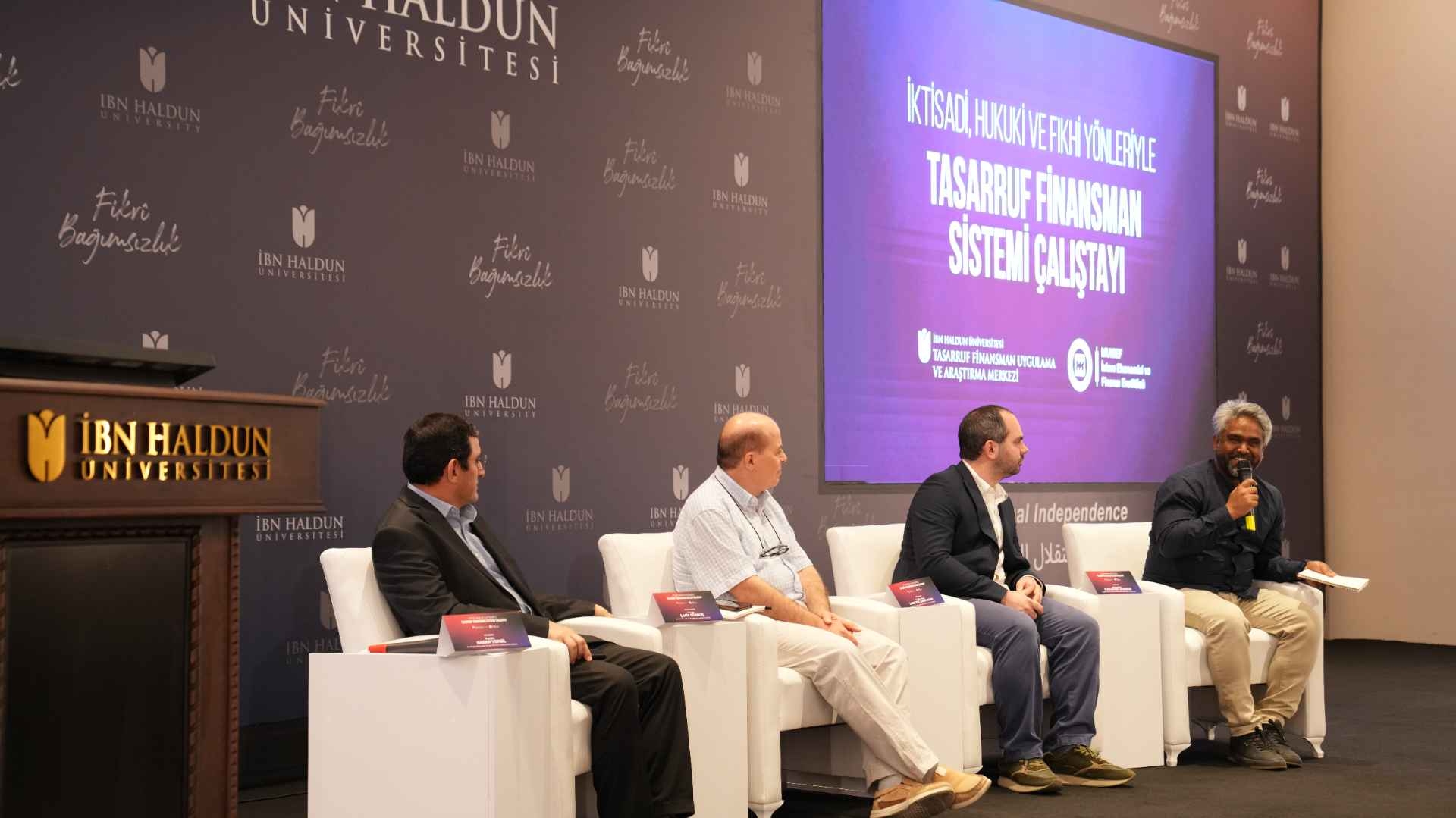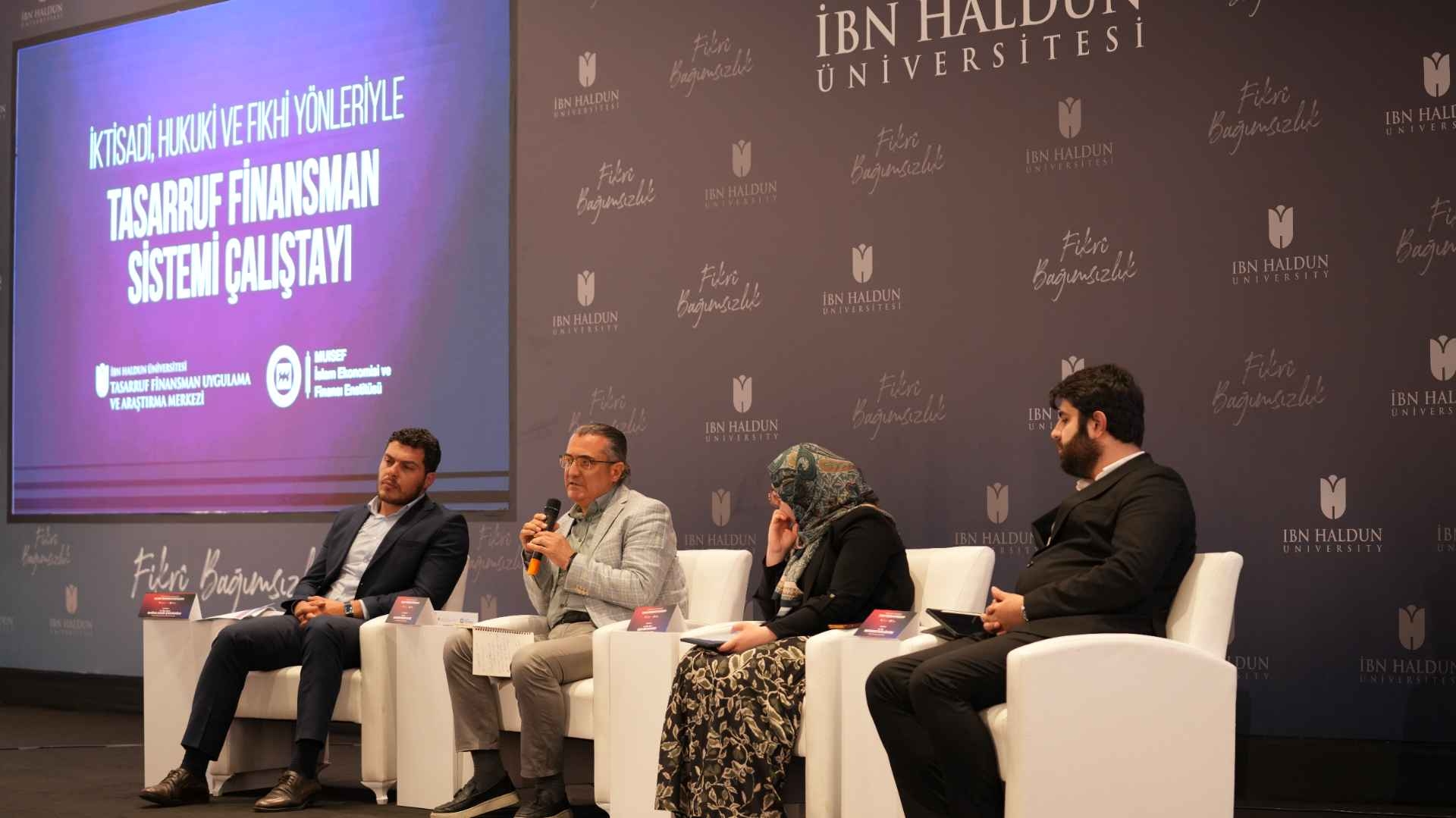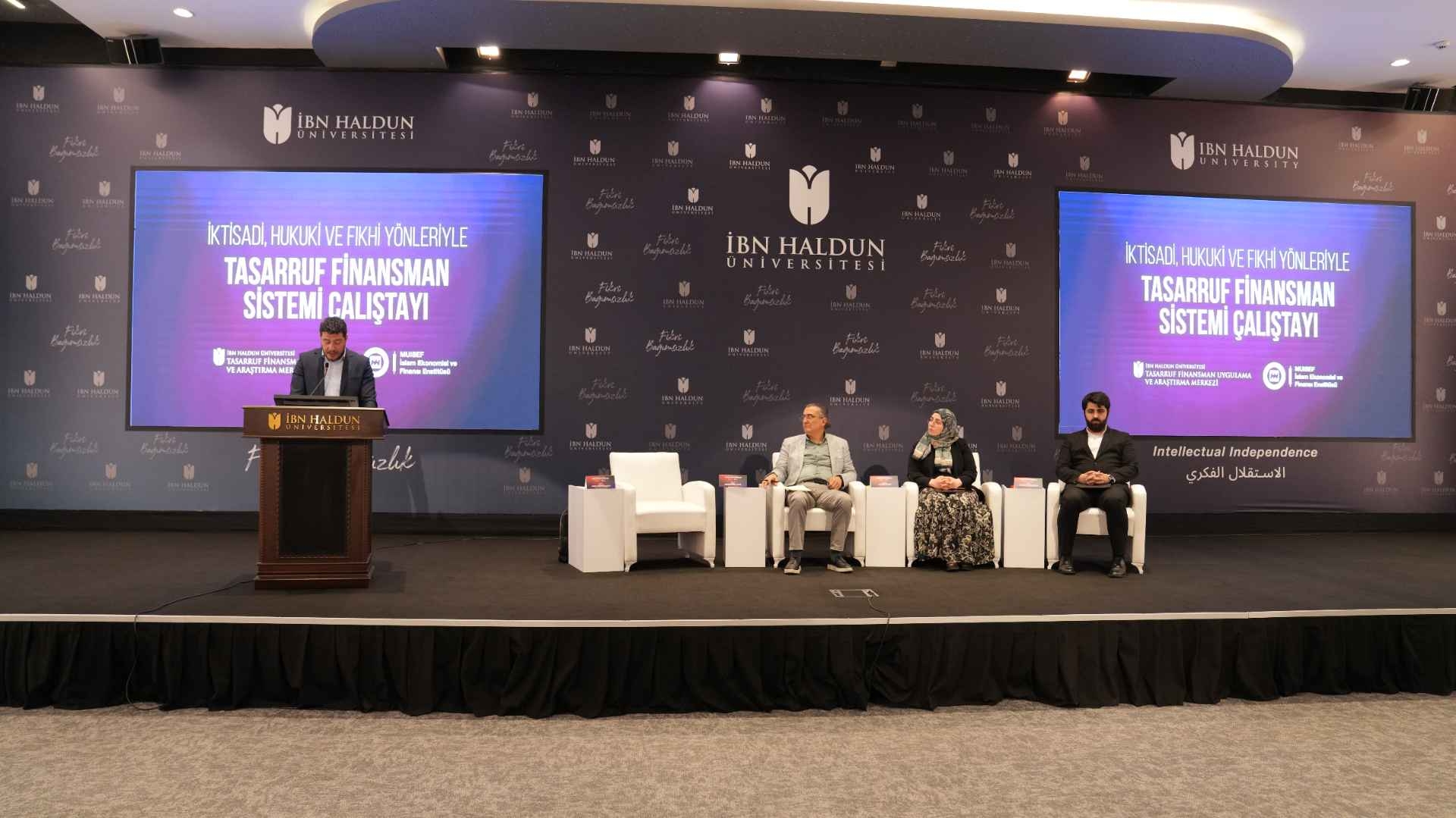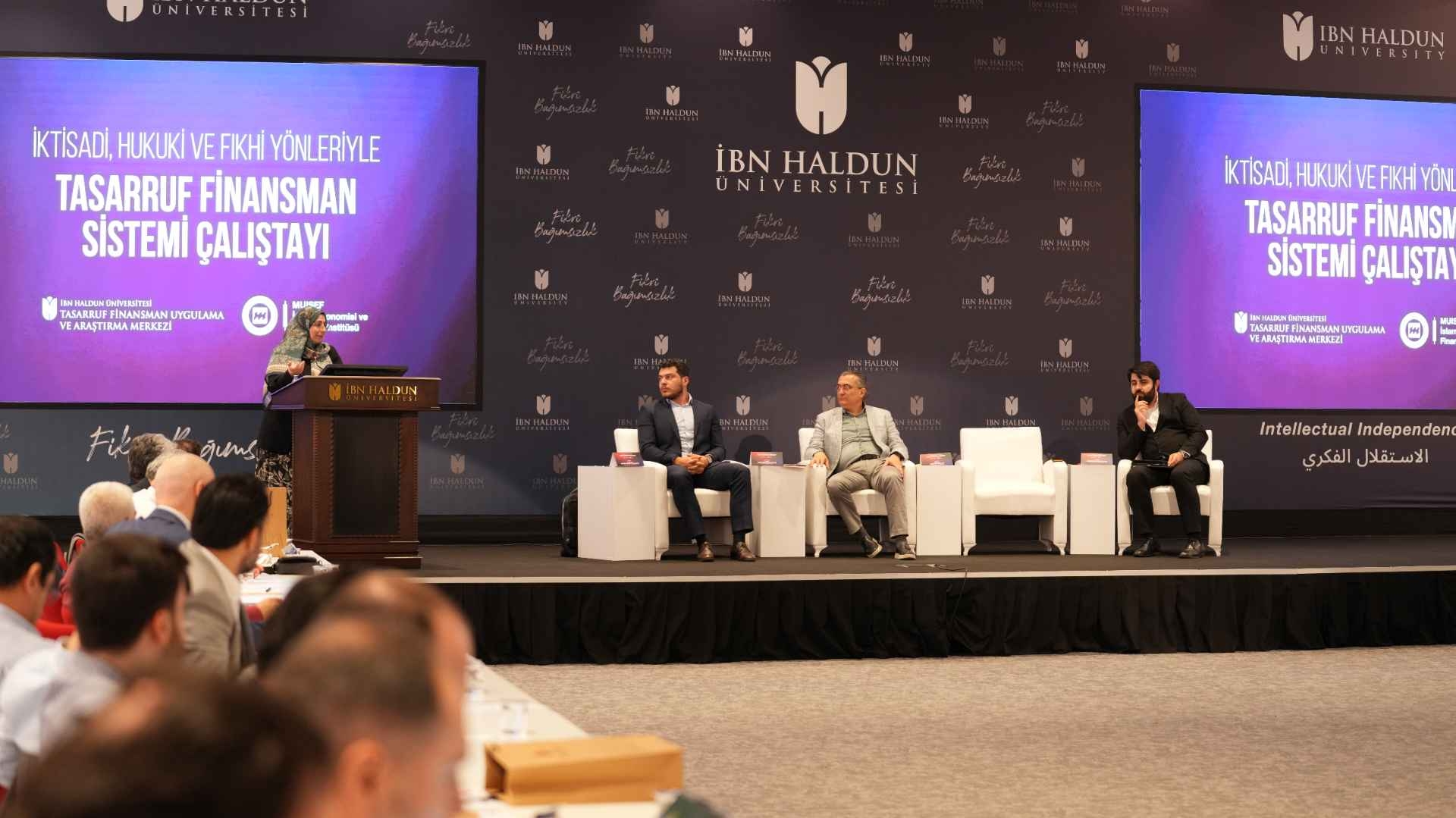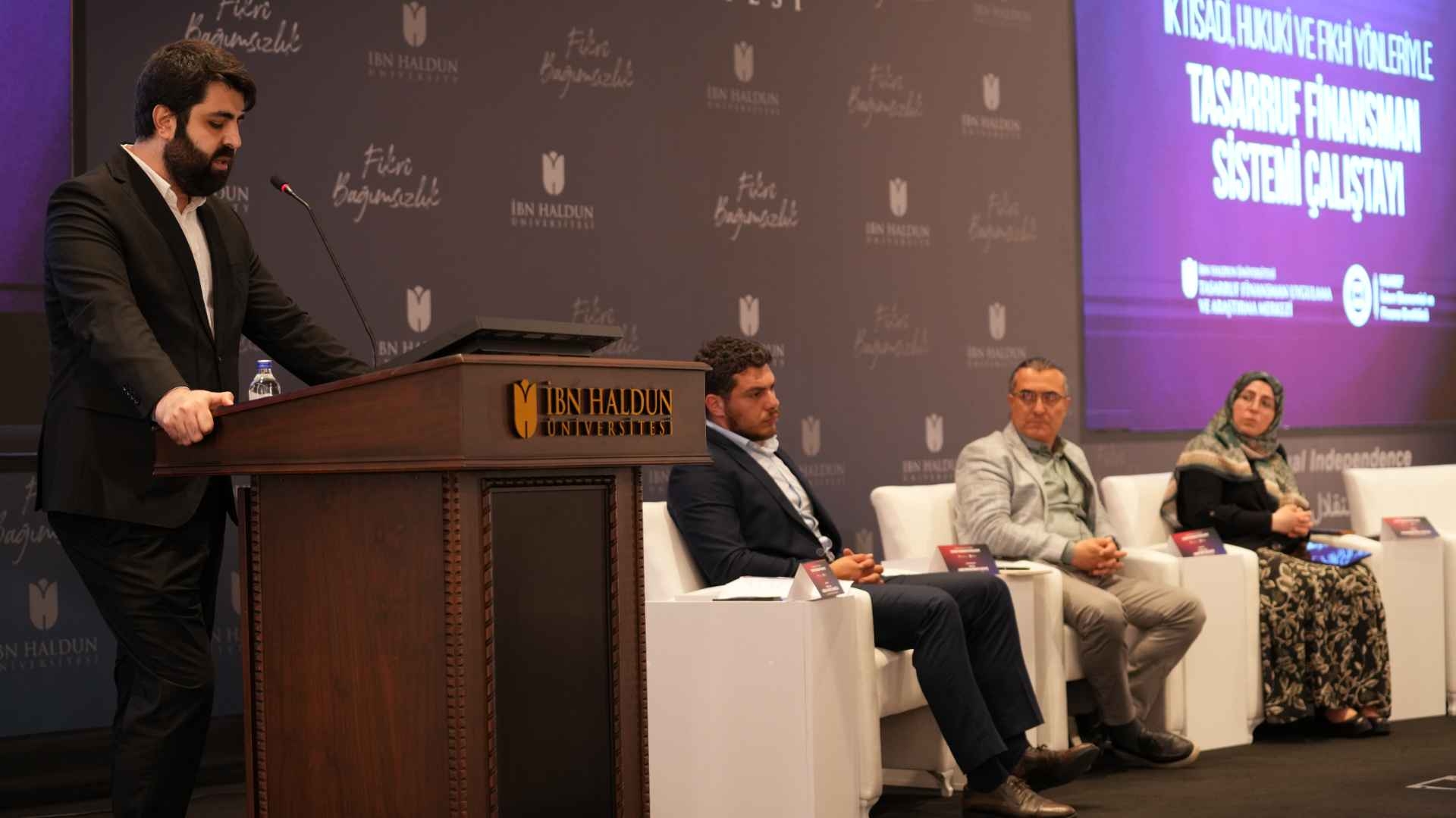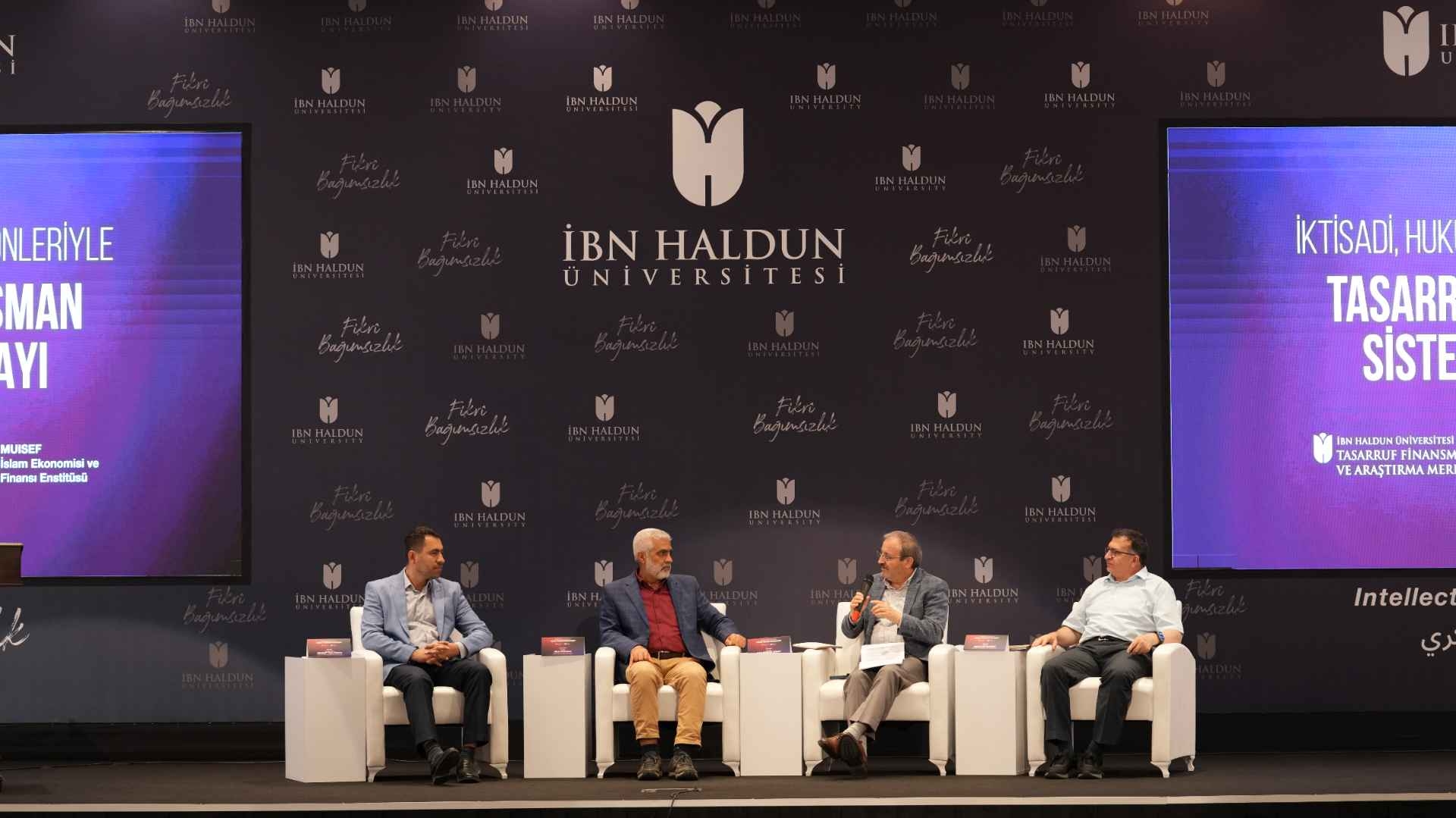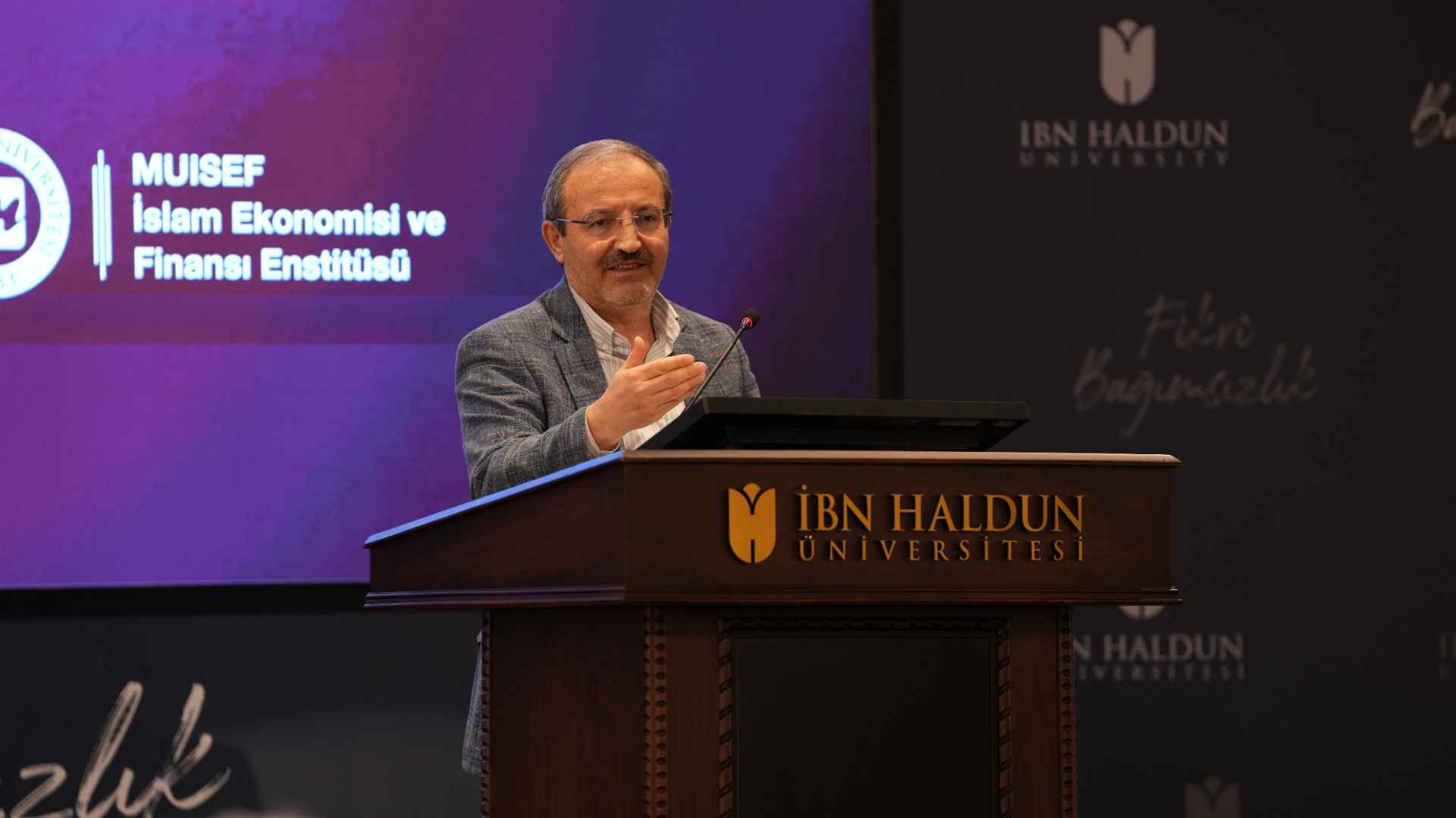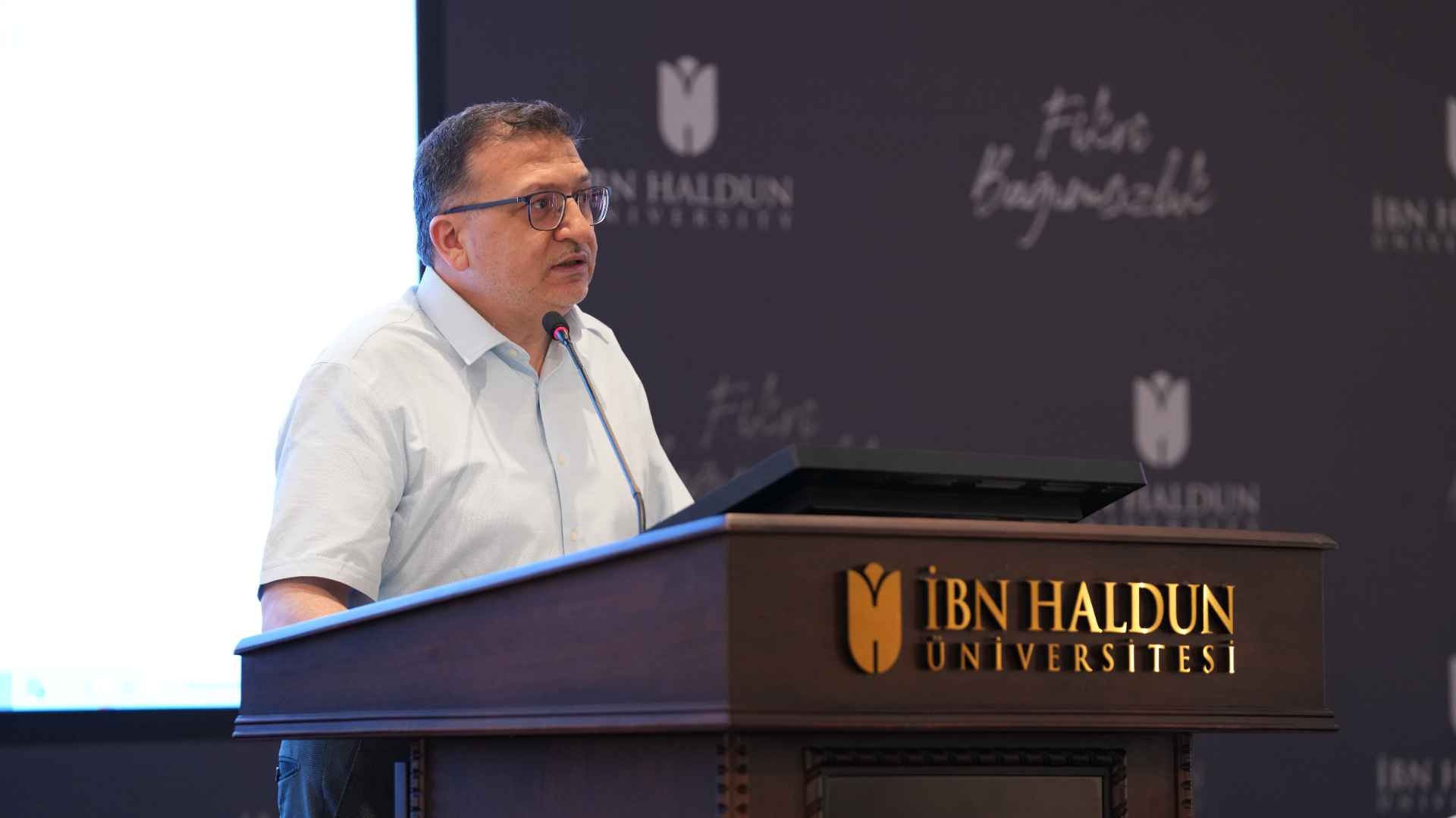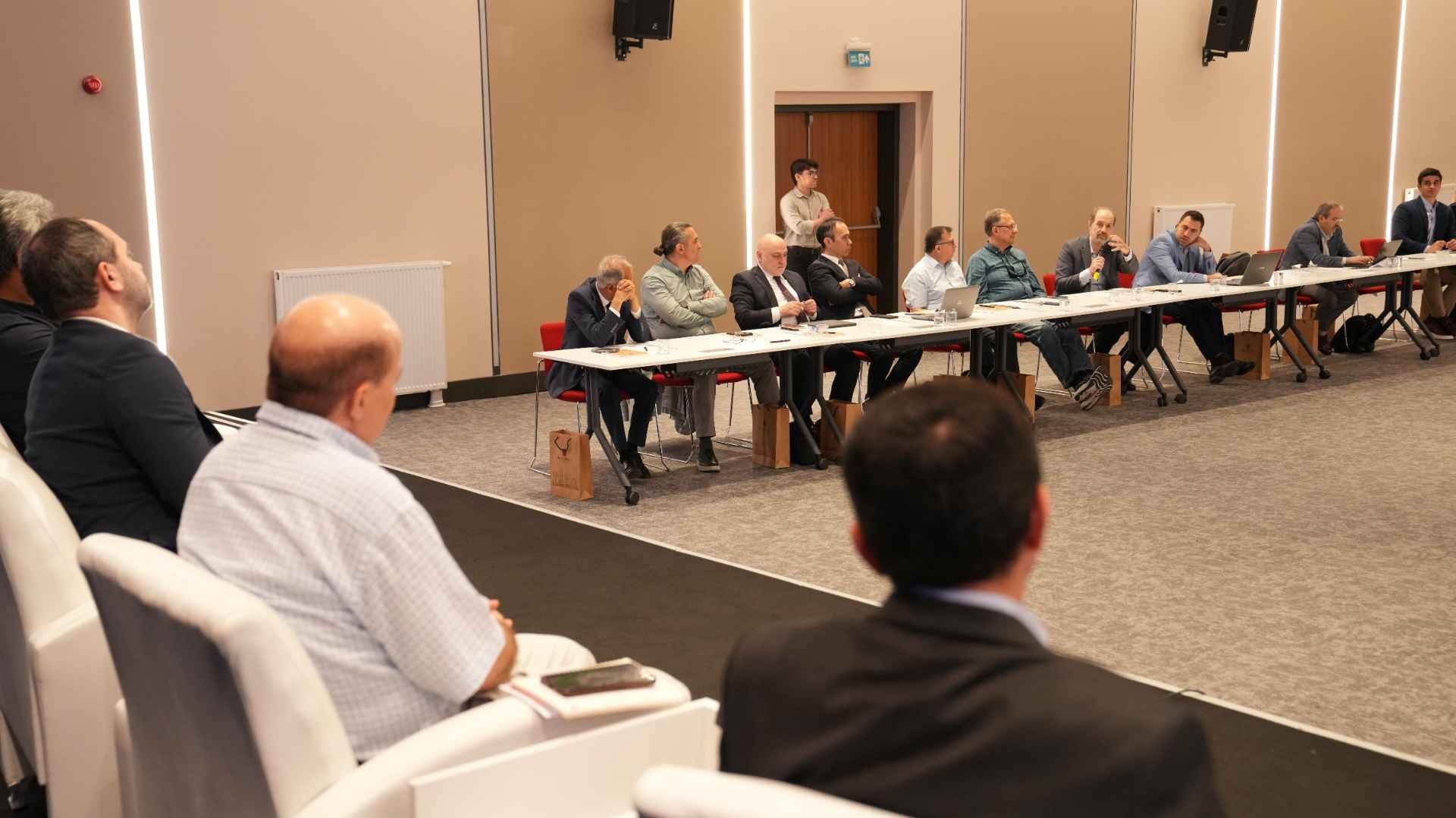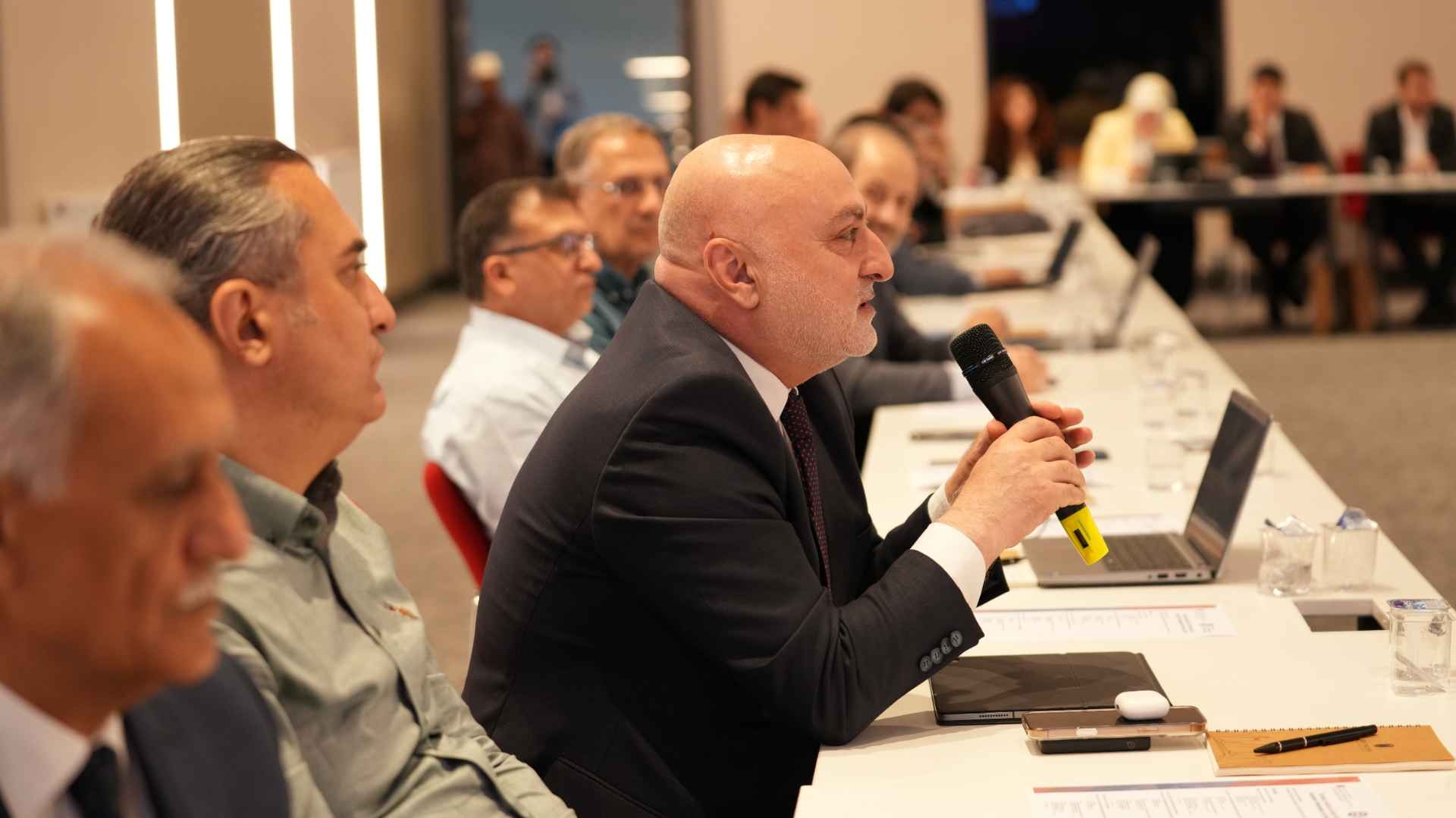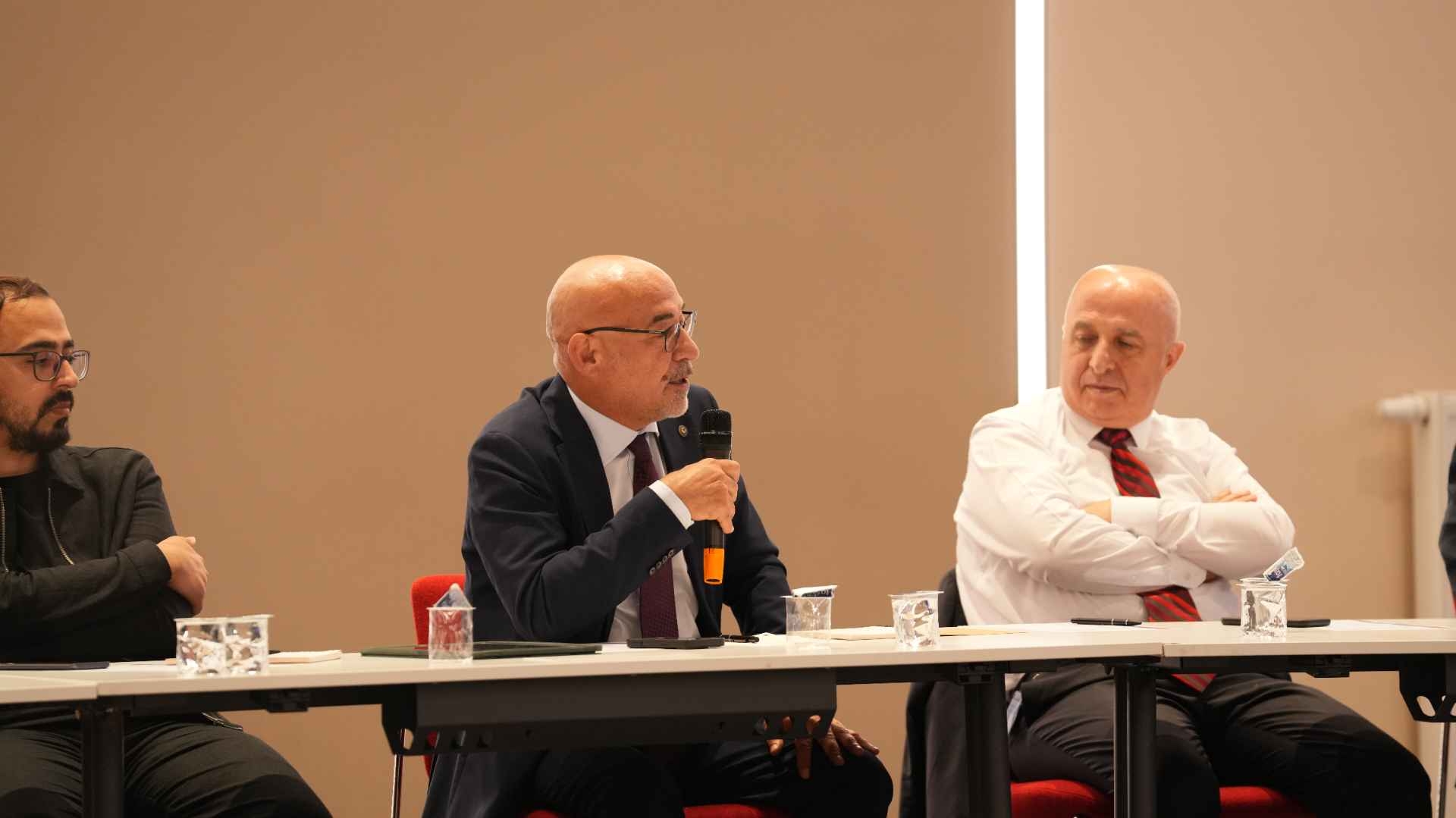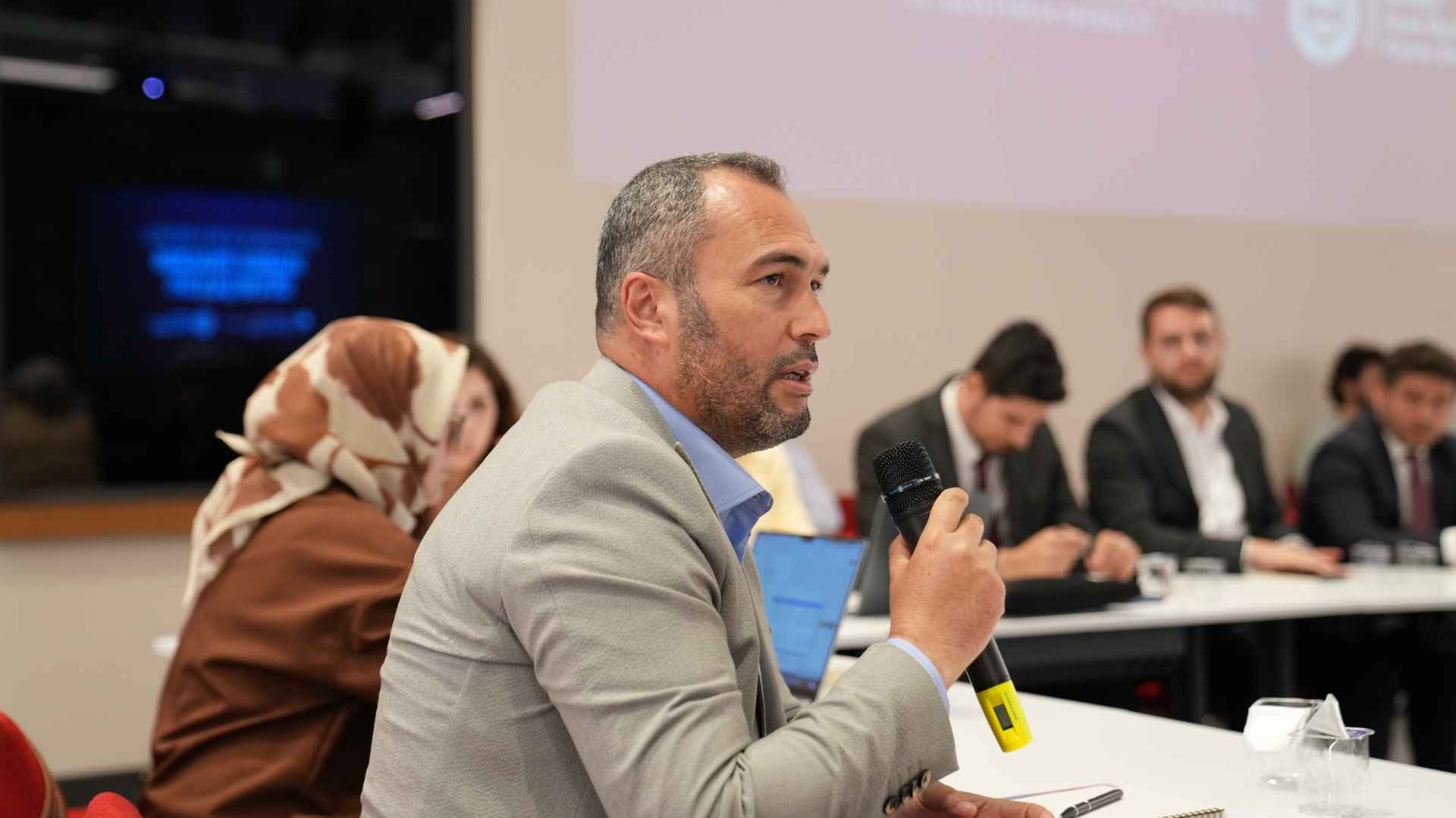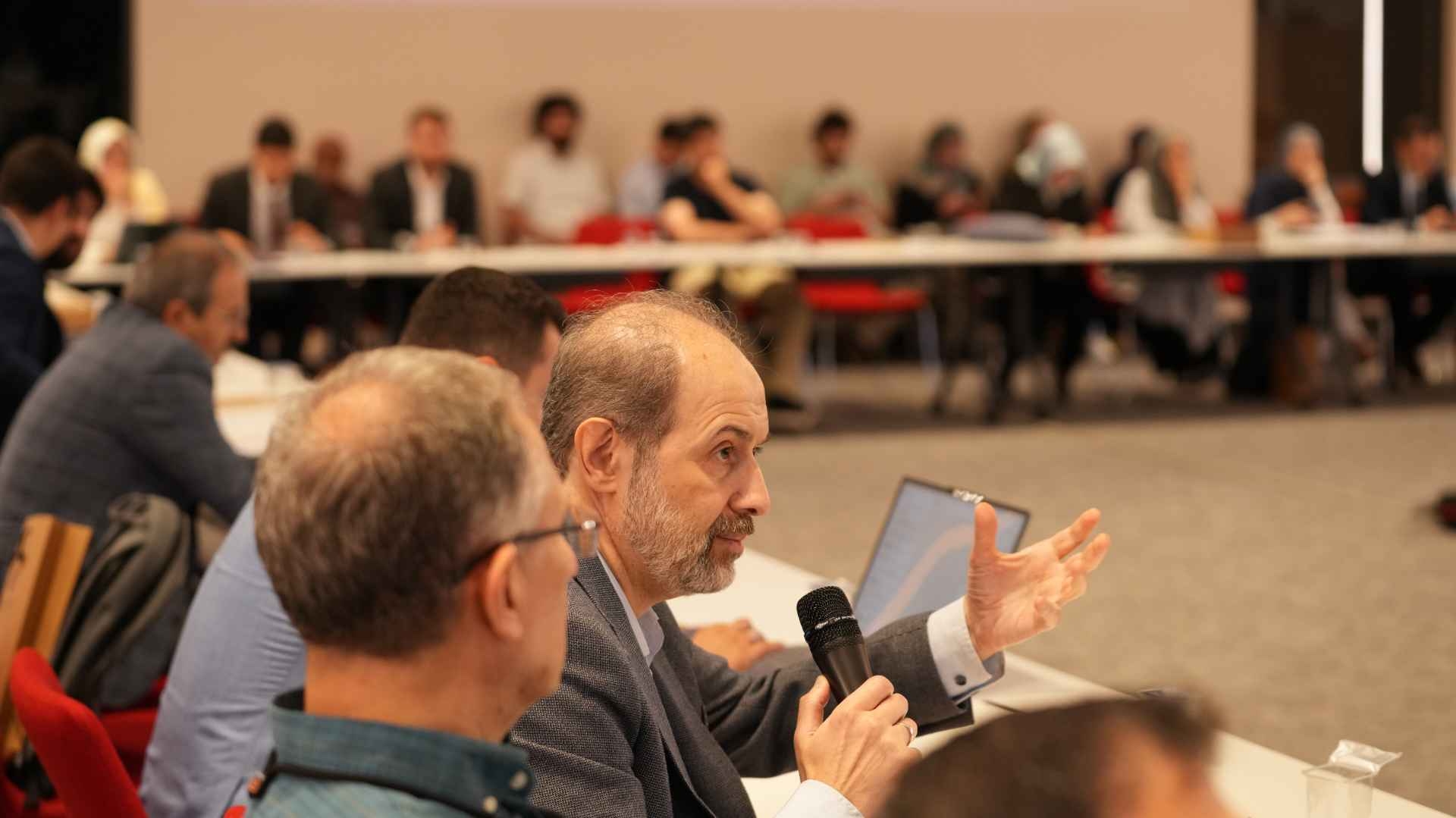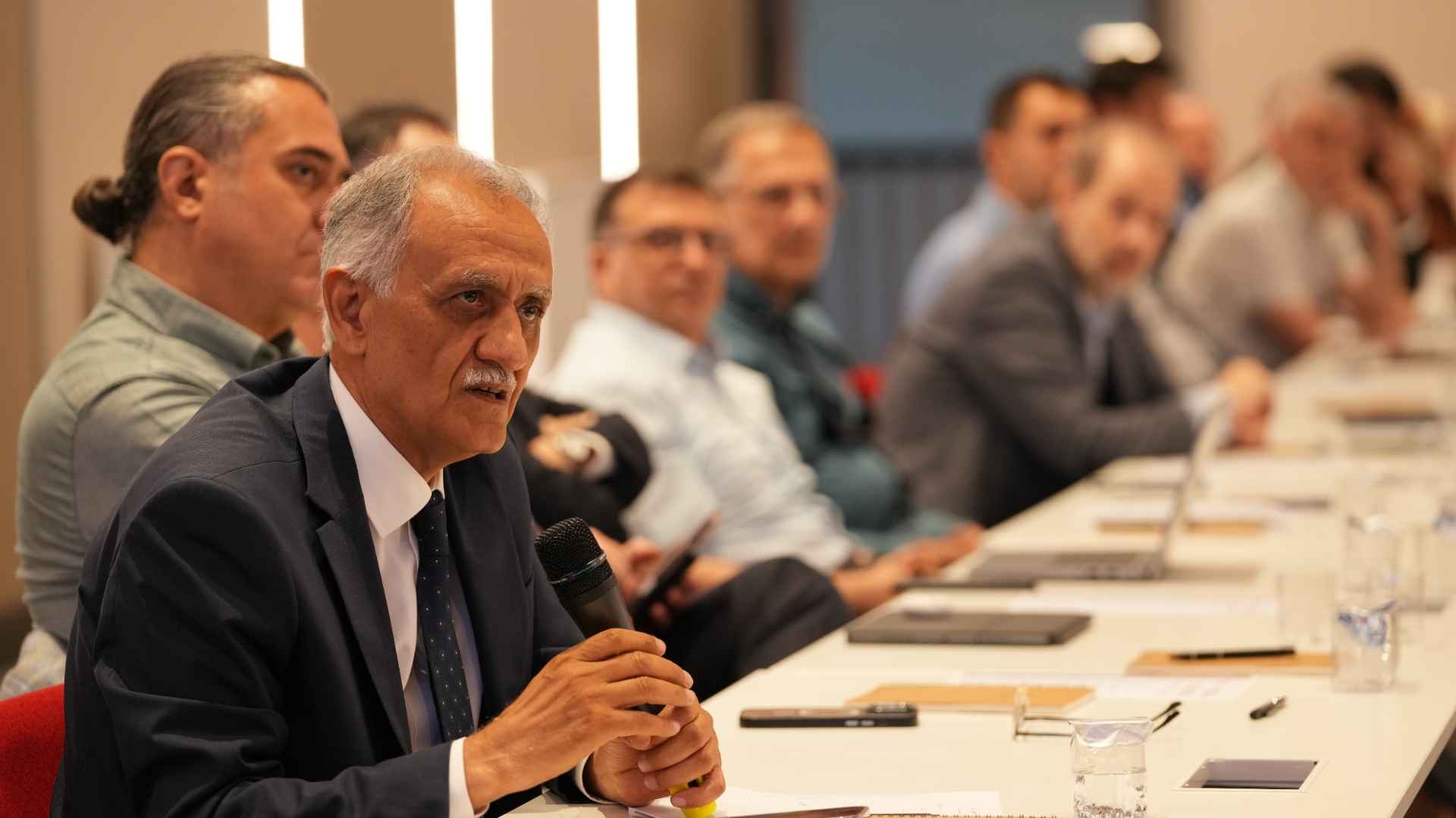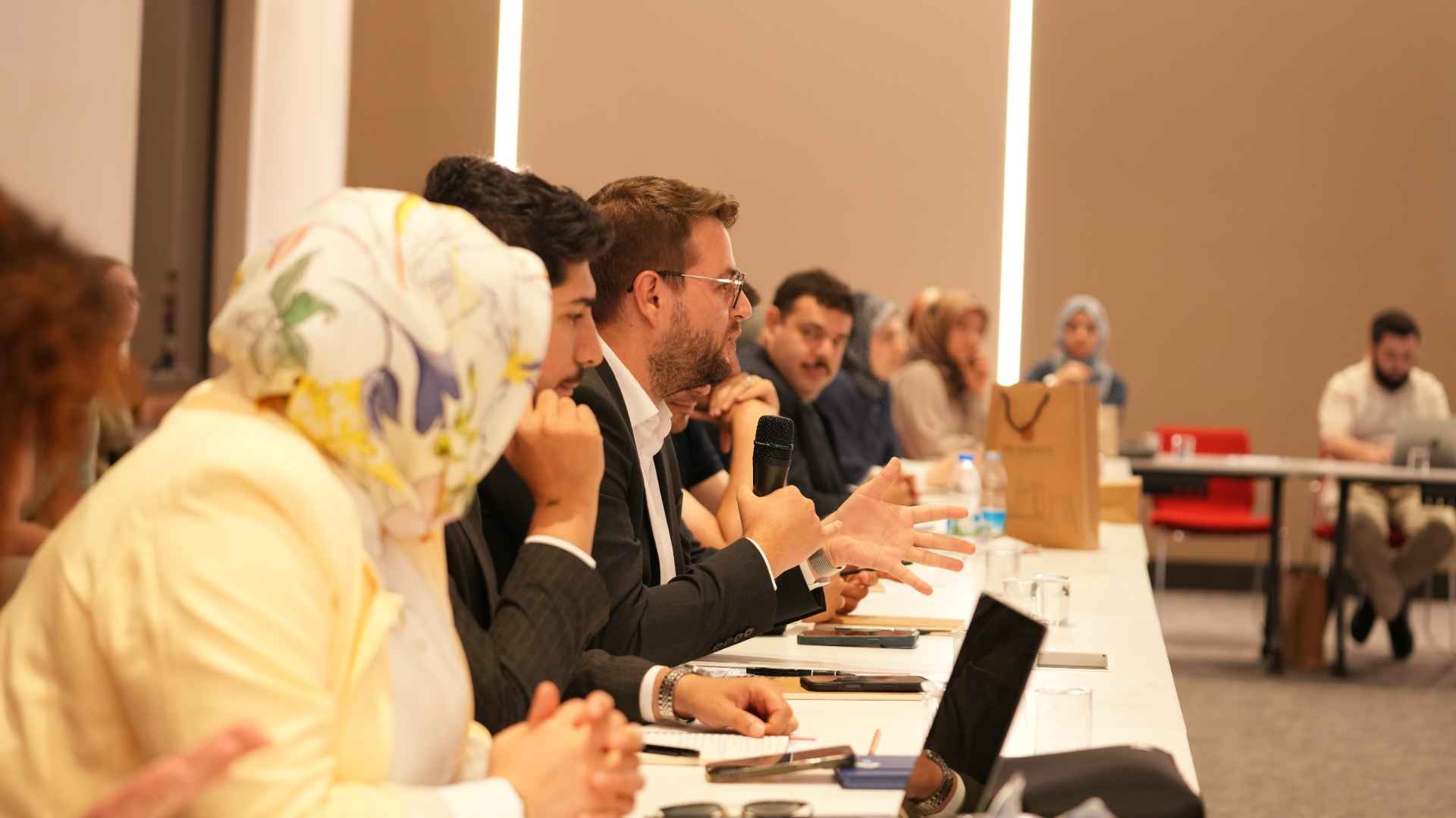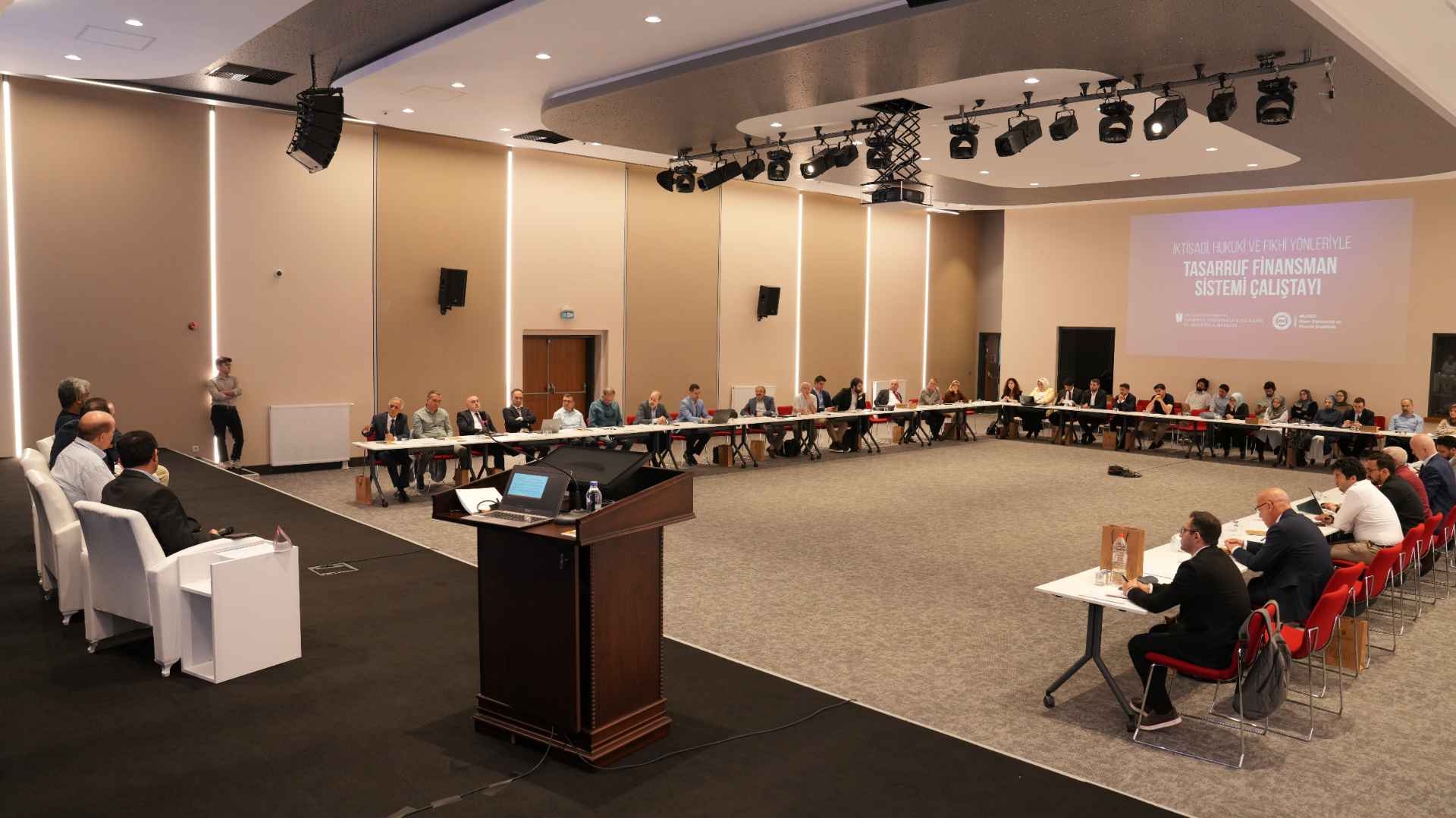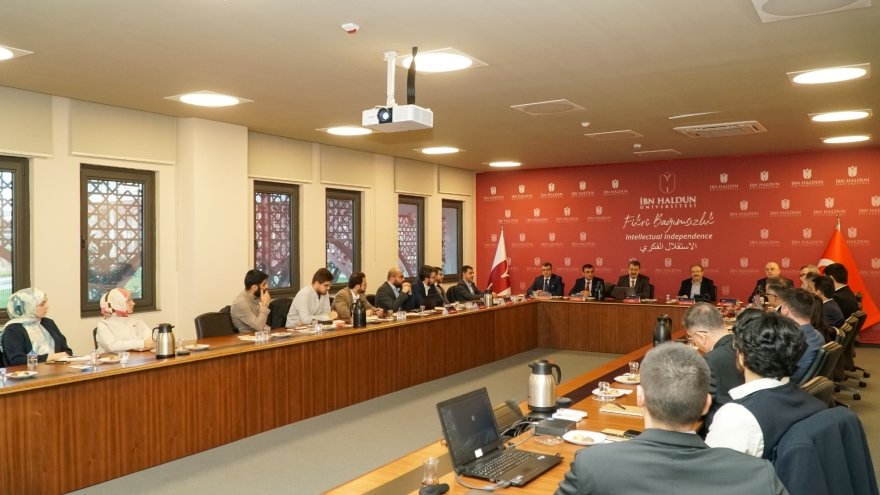
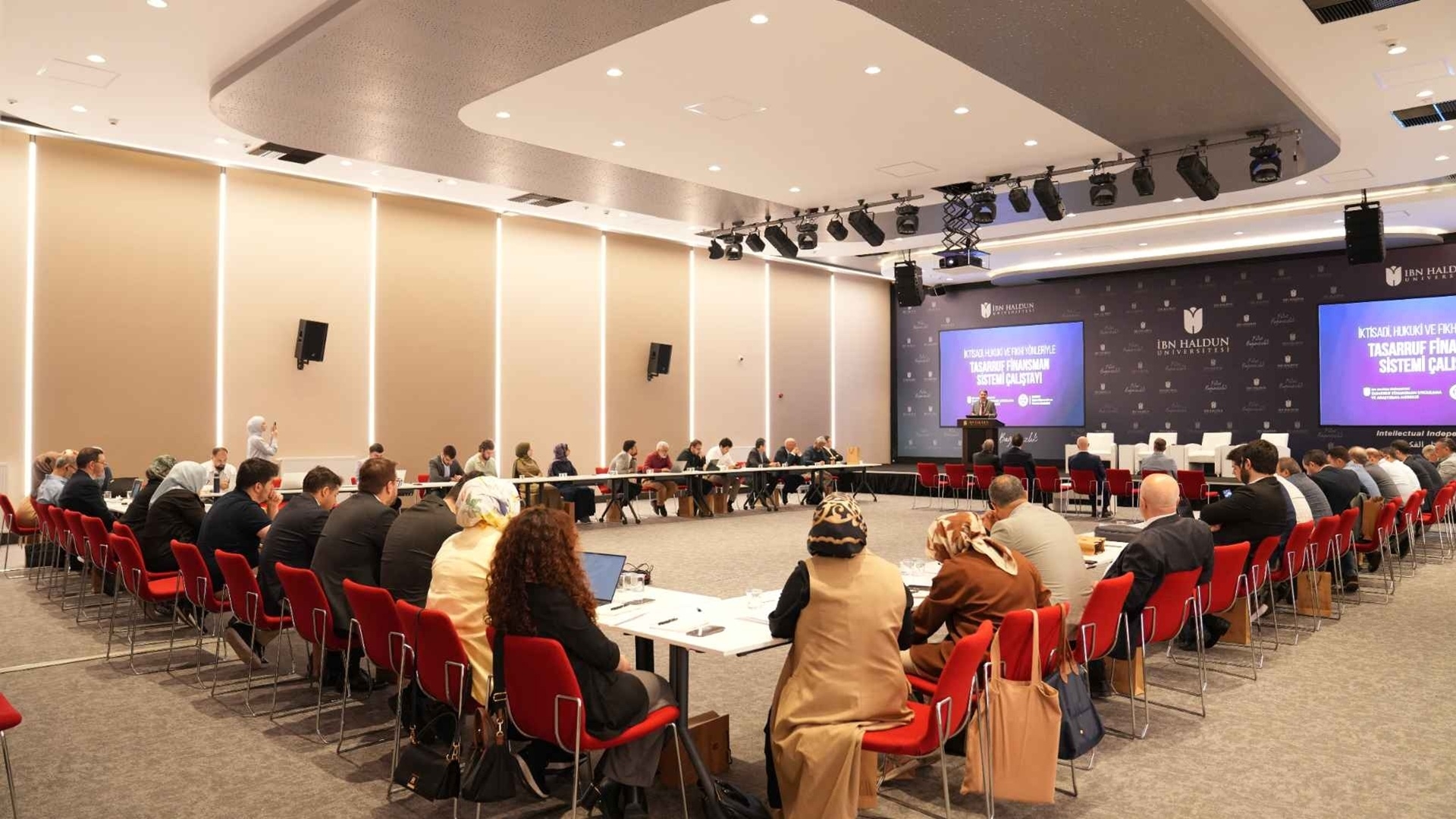
The “Workshop on the Economic, Legal, and Jurisprudential Aspects of the Savings Finance System,” organized in collaboration between the Savings Financing Applications and Research Center at Ibn Haldun University and the Institute of Islamic Economics and Finance at Marmara University, was held on Wednesday, June 10, 2026, at the Media Center Event Hall on the Başakşehir Campus of Ibn Haldun University. This significant program, which brought together academics from various universities as well as executives and representatives from Association of Financial Institutions, Participation Banks Association of Türkiye, and Savings Financing Companies, facilitated a meeting of common ground between academia and the industry.
The workshop began with opening remarks by the protocol following a morning reception and welcome. Speaking in order at the opening were: Prof. Dr. Hasan Hacak, Director of the Savings Financing Application and Research Center at Ibn Haldun University; Prof. Dr. Ertuğrul Boynukalın, Director of the Institute of Islamic Economics and Finance at Marmara University; Ali Emre Ballı, Chairman of the Board of Directors of the Association of Financial Institutions; and Prof. Dr. Atilla Arkan, Rector of Ibn Haldun University.
The speakers highlighted the strategic importance of the savings finance system in the Turkish economy, its unifying role within the participatory finance ecosystem, and the absolute necessity of theoretical and practical collaboration between universities and the industry for the sector’s healthy growth.
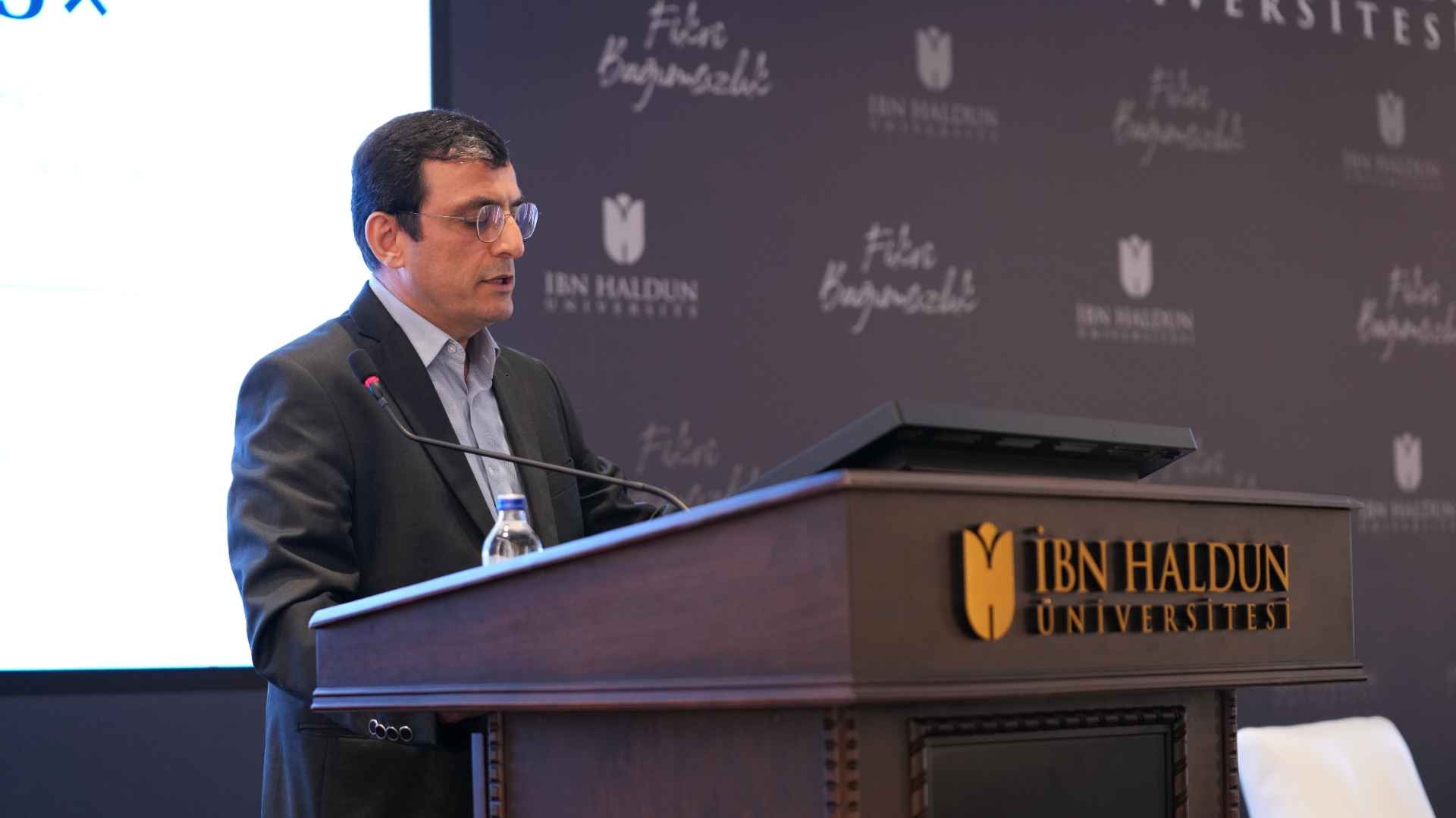
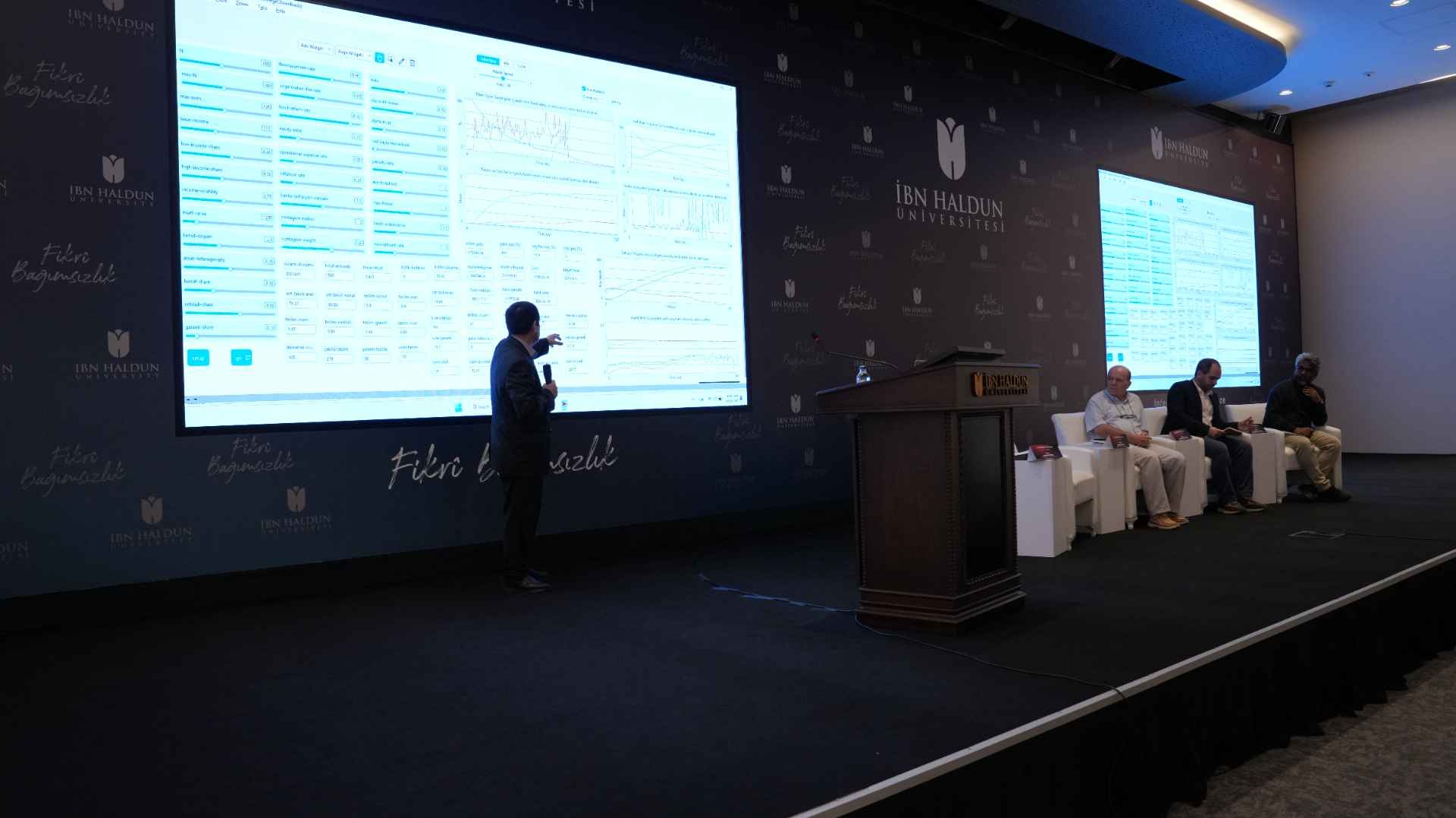
In the first session chaired by Prof. Dr. Şakir Görmüş, Prof. Dr. Hasan Vergil presented his paper titled “Sustainability Analysis of the Savings Finance Sector”. In the presentation, the system’s sustainability was examined within the framework of an Agent-Based Model (ABM) analysis; key topics such as inflation dynamics, compliance with the BDDK, the confidence factor, the impact of different income groups on the system, and a comparison with bank loans were addressed. The session’s discussants, Dr. Huzeyfe Zahit Atan and Dr. S M Rashed Jahangir, evaluated the economic models presented and the findings identified.
Following the lunch break, the second session began under the chairmanship of Prof. Dr. Abdurrahman Savaş, during which Dr. Buğra Kaan Çakıroğlu presented his paper titled “The Savings Finance System and the Legal Structure of the Savings Finance Contract” to the participants. The presentation covered the historical development of the system, the legal framework established by Law No. 6361, the constituent elements of the savings finance contract, and the legal characterization debates—centered on the “immediate-continuous performance” framework in legal doctrine—along with proposed solutions. Subsequently, the discussants, Dr. Meryem Solmaz and Research Assistant Muammer Fatih Öztürk, also contributed by evaluating the legal issues raised.
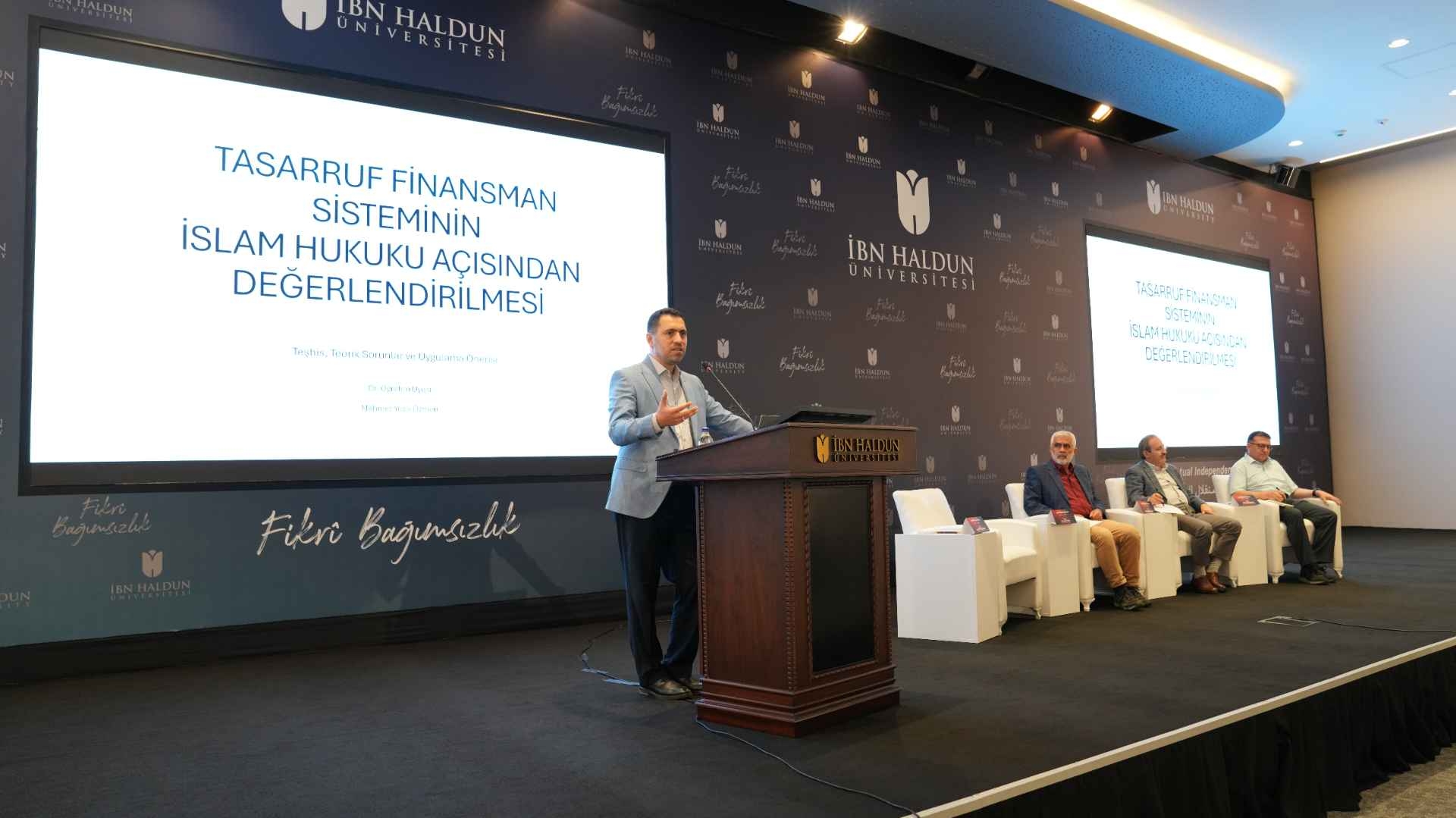
In the final session of the workshop, chaired by Prof. Dr. Bilal Aybakan, Dr. Mehmet Yuşa Özmen delivered a presentation titled “An Evaluation of the Savings Finance System from the Perspective of Islamic Law.” In this section, an analysis of the system’s operation from an Islamic law perspective was conducted, focusing on topics such as the differing contractual views prominent in the doctrine, the nature of ownership of the savings fund pool, the company’s role as an agent, and the Islamic legal status of the organizational fee. Prof. Dr. Hacı Mehmet Günay and Prof. Dr. Abdullah Durmuş then provided a comprehensive evaluation of the legal findings and topics presented in the paper. During the question-and-answer sessions held at the end of each of the three sessions, a productive exchange of information took place between industry representatives and academics, fostering fruitful dialogues on how the theoretical framework could be reflected in practical applications in the field. The workshop concluded with significant interest.